

A water stain on your ceiling is one of the most stressful things a homeowner can discover. You know something’s wrong up there, but you don’t know how bad it is, how much it’ll cost, or whether you can fix it yourself. This roof repair guide is designed to answer all three questions clearly.
You’ll get 2026 cost ranges for the most common roof repairs, a plain-language breakdown of what causes each problem, a practical DIY vs. professional decision framework, and emergency steps you can take right now if water is actively getting in.
Whether you’re dealing with a few missing shingles after a storm or a persistent leak you can’t locate, this guide gives you the knowledge to act confidently.
The Most Common Roof Problems — and What Causes Them
Most roof issues trace back to one of five root causes: age, storm damage, improper installation, lack of maintenance, or failed flashing. Here’s what you’ll actually encounter as a homeowner:
Missing, Cracked, or Curling Shingles
This is the most visible and common asphalt shingle problem. High winds (anything above 60 mph) can lift shingles that are past their adhesive bond. UV exposure causes cracking and curling, especially on south-facing slopes. Granule loss — those rough gray flecks in your gutters — signals that shingles are nearing end of life.
Urgency: Moderate. Replace missing shingles quickly, especially before rain. Each exposed section is a direct water entry point.
Roof Leaks
A leak you can see on your ceiling often entered the roof 10–20 feet away. Water travels along rafters and deck boards before dripping down. The actual entry point is almost always at a penetration (chimney, vent pipe, skylight) or at flashing, not through intact shingles. That’s why patching shingles doesn’t always stop a leak.
Urgency: High. Untreated leaks lead to deck rot, mold growth, and damaged insulation within weeks during wet weather.
Flashing Failures
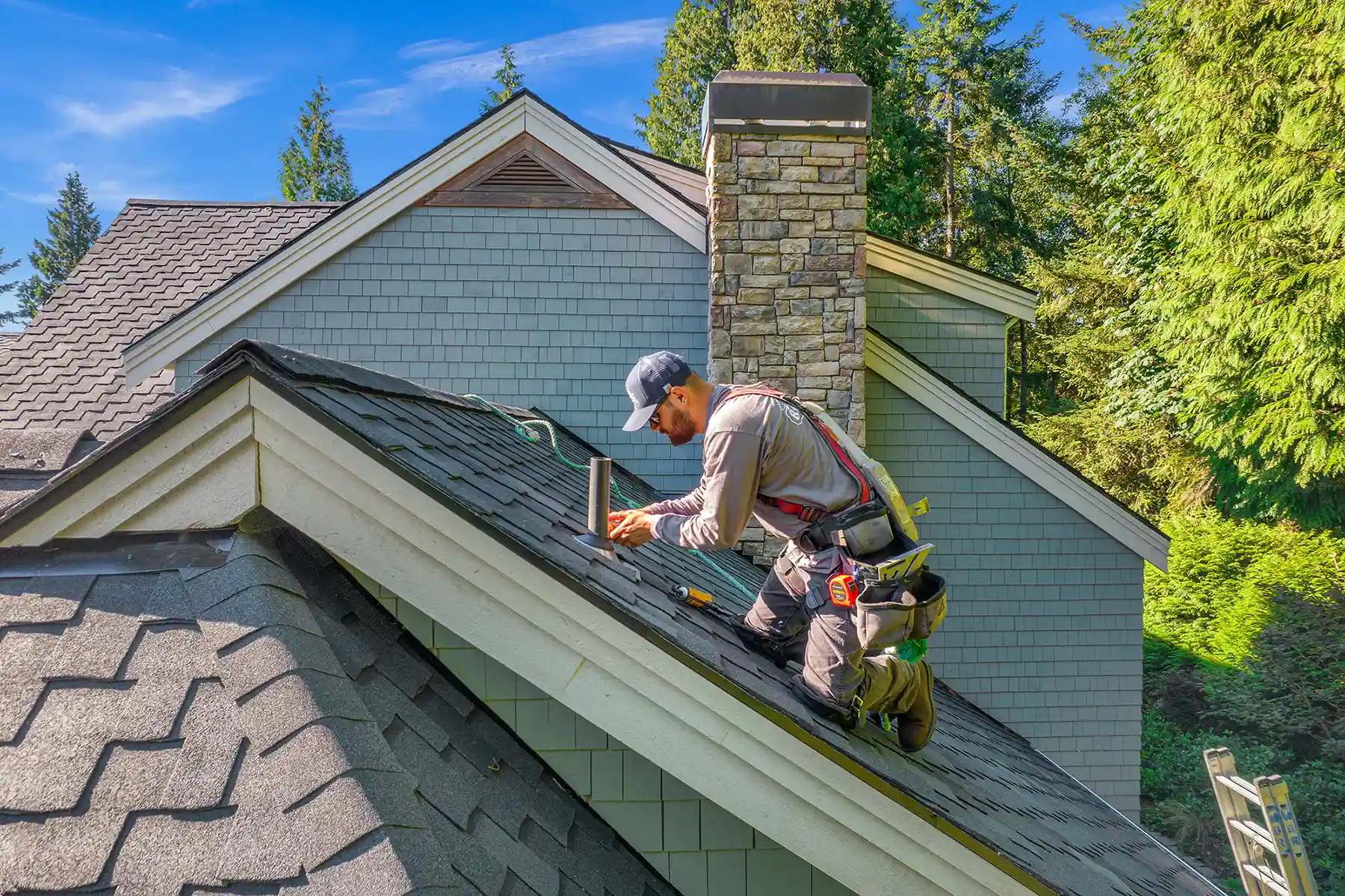
Flashing — the metal strips that seal transitions between roofing and vertical surfaces — is the single most common source of leaks in residential roofing. Chimney saddles, pipe boots, step flashing at dormers, and valley flashing all degrade over time. Rust, separation from the substrate, or improper original installation are the main culprits.
Urgency: High. Flashing failures rarely resolve on their own and almost always require a professional repair.
Sagging Roof Sections
A visible sag or dip in your roofline is a structural warning sign. It usually indicates rot in the roof decking (sheathing), failed rafters or trusses, or a chronic moisture problem that’s been silently worsening. Sagging almost never happens overnight — it’s the result of ignored smaller problems compounding over time.
Urgency: Critical. Stop using the room below and call a structural roofing contractor immediately. This isn’t a DIY scenario under any circumstances.
Ice Dams
Ice dams form when heat escaping from a poorly insulated attic melts snow on the upper roof. That water runs down to the cold eaves and refreezes, trapping liquid water behind a wall of ice. That water then backs under shingles and into the home. The fix isn’t just removing ice — it requires addressing attic insulation (R-value) and ventilation at the source.
Urgency: High in cold climates. Recurring ice dams are a sign of inadequate attic ventilation, not just bad weather.
Soffit, Fascia, and Gutter Problems
Damaged soffit and fascia boards might not seem like a roofing issue, but they’re part of the complete roofing system. Rotted fascia allows water to wick into the roof structure, and damaged soffit blocks the airflow that protects your roof from heat and moisture buildup. Gutters pulling away from the fascia are a telltale sign the wood behind them is compromised.
Roof Repair Cost Guide — 2026 Pricing
These ranges reflect 2026 market estimates for typical residential repairs. Labor rates, material costs, and accessibility all influence final pricing. Costs in high-cost-of-living metros (Northeast, West Coast) often run 20–30% higher. Always collect at least three quotes from licensed roofing contractors before authorizing work.
| Repair Type | 2026 Cost Range | Time | DIY? | Urgency |
|---|---|---|---|---|
| Missing/cracked shingles | $150–$450 | 1–3 hrs | Possible | Low |
| Roof leak (minor) | $300–$900 | 2–4 hrs | Possible | Medium |
| Flashing repair | $200–$600 | 2–5 hrs | Difficult | Medium |
| Roof leak (major/structural) | $800–$3,000+ | 4–8+ hrs | No | High |
| Sagging roof section | $1,500–$7,000+ | 1–3 days | No | Urgent |
| Chimney flashing | $350–$1,000 | 3–6 hrs | Difficult | Medium |
| Valley flashing | $250–$800 | 2–5 hrs | No | Medium |
| Flat roof patch | $300–$1,200 | 2–6 hrs | Possible | Medium |
| Soffit & fascia repair | $600–$2,000 | Half–1 day | No | Medium |
Note: Costs listed assume the problem is isolated and the deck beneath is sound. If deck rot or structural damage is discovered during repair, expect additional charges of $75–$110 per sheet of decking replaced.
DIY vs. Professional Roof Repair: How to Decide
The honest answer is that most roof repairs are better handled by a professional. Roofwork involves height, safety risks, and technical knowledge of how materials interact. That said, a confident homeowner with basic tools can handle a narrow set of repairs safely. Use this table to guide your decision.
| DIY-Friendly Tasks | Call a Pro Instead |
|---|---|
| Replace 1–3 missing asphalt shingles | Any leak you can’t pinpoint from the attic |
| Apply roof cement to a visible minor crack | Flashing repair at chimney, skylight, or wall |
| Patch a small flat roof blister or seam | Sagging, soft spots, or deck rot suspected |
| Clear debris from gutters and valleys | Storm damage covering multiple sections |
| Reseal exposed nail heads on low-slope areas | Roof over 2 stories or pitch above 6:12 |
| Insurance claim work (documentation required) |
If You’re Going DIY: Safety Non-Negotiables
- Use a stable, properly rated ladder with standoffs — never lean it against gutters
- Work only on dry days; wet shingles are extremely slippery
- Wear rubber-soled shoes and use roof jacks or a harness on any pitch above 4:12
- Never work alone — always have someone present in case of a fall
- If you feel uncertain at any point, stop. A $300 repair isn’t worth a serious injury
Important: DIY repairs on a roof under manufacturer warranty can void that warranty. Check your GAF, Owens Corning, CertainTeed, or IKO documentation before touching anything.
Emergency Roof Repair: What to Do Right Now
If water is actively entering your home, take these steps in order. Speed matters — water damage to insulation, drywall, and structural members escalates quickly.
EMERGENCY ROOF LEAK: What to Do Right Now
- Move valuables and place buckets under drips
- Go to the attic with a flashlight — trace the wet trail uphill to find the entry point
- If you can safely access the roof, cover the area with a heavy-duty tarp (6 mil poly minimum) secured with 2x4s — never just sandbags
- Take photos of all visible damage before any temporary repairs — this protects your insurance claim
- Call a licensed roofing contractor for emergency service — not a handyman
Never walk on a wet or structurally compromised roof. Safety comes before any temporary fix.
Temporary tarping can protect your home for days or weeks while you arrange proper repairs. A well-secured tarp with 2×4 battens will survive most weather. Avoid roofing cement as a permanent fix — it fails within a season and masks the actual problem from your next contractor.
Roof Repair Prevention Strategies
Most roof repairs are predictable and preventable. The National Roofing Contractors Association (NRCA) recommends two professional inspections per year — spring and fall. Between those, a few targeted maintenance habits dramatically reduce your repair bill over time.
Annual Roof Maintenance Checklist
- Spring: Clear gutters of winter debris; inspect shingles for frost damage; check pipe boot seals
- Summer: Trim overhanging branches; check attic ventilation for proper airflow (ridge vent + soffit vents)
- Fall: Clear gutters before first freeze; inspect flashing at all penetrations; look for granule buildup in gutters
- Winter: After heavy snow, check for ice dams at eaves; never use a metal shovel on shingles
Pro tip: Have a licensed contractor do a full roof inspection every 3–5 years, or after any major storm event.
One often-overlooked factor: attic ventilation. Proper airflow through your attic — typically via ridge vents plus soffit vents — keeps your roof deck dry and at a stable temperature. Restricted ventilation raises attic heat by 30–40 degrees in summer, which accelerates shingle aging and can cut 5–10 years off a manufacturer’s stated lifespan.
The Asphalt Roofing Manufacturers Association (ARMA) notes that moisture damage from poor ventilation is one of the leading causes of premature roof failure. Checking that your soffit vents are unobstructed by insulation is free and takes five minutes.
How to Find a Trustworthy Roofing Contractor for Repairs
Repair work attracts more than its share of storm chasers and low-bid contractors because individual repairs are hard for homeowners to verify once they’re done. Here’s how to protect yourself:
- Verify the contractor’s state license and look them up with your state licensing board online
- Request certificates of insurance showing general liability AND workers’ compensation coverage
- Search the NRCA’s Contractor Locator for verified professional members in your area
- Check Google and BBB reviews specifically for how they handle warranty callbacks — not just initial work
- Ask for a written scope of work before any repair begins, not just a verbal quote
- Avoid any contractor who asks for full payment upfront — a deposit of 10–30% is industry standard for repairs
- For insurance claims, work with a contractor who provides photo documentation of all damage and communicates with your adjuster directly
Be especially wary of contractors who appear door-to-door immediately after a storm. Legitimate local contractors are busy after major weather events; the ones at your door may be traveling outfits with no local accountability.
FAQ: Roof Repair Questions Answered
How much does a roof repair cost on average in 2026?
Most homeowners pay $300–$1,500 for a typical residential roof repair in 2026. Minor fixes like replacing a few missing shingles or sealing a small leak run $150–$450, while more complex repairs involving flashing, structural issues, or large leak damage can reach $2,000–$3,000 or more. Costs vary significantly by region and roof complexity.
How do I find a roof leak?
Start in the attic on a bright day with all lights off. Look for daylight coming through the deck boards or dark water stains on rafters and sheathing. Trace any staining uphill and toward roof penetrations like vents, chimneys, and skylights — that’s where 80% of leaks originate. If you can’t find it from the attic, a contractor can perform a controlled water test from the exterior.
Can I use flex seal or roofing cement to fix a leak?
Roofing cement and sealant products can work as a very short-term temporary measure, but they’re not lasting solutions. They harden and crack with UV exposure, often within one season. More importantly, they can mask the real problem from future contractors and may void your roof warranty. For any leak beyond a pinhole, get a proper assessment.
Will homeowners insurance cover roof repair?
It depends on the cause. Most homeowners insurance policies cover sudden, accidental damage from storms, hail, wind, or falling trees. They don’t cover normal wear, age-related deterioration, or neglect. If you have storm damage, document everything before temporary repairs and contact your insurer before authorizing a contractor to do full work. A Class 4 impact-rated roof can lower your premiums in hail-prone areas.
How long does a roof repair take?
Minor repairs like replacing a few shingles or resealing flashing take 1–3 hours. More involved work like chimney flashing, valley repairs, or locating and fixing a complex leak typically takes half a day to a full day. Structural repairs involving deck replacement or rafter work can take 1–3 days. Most contractors can give you a realistic timeline in the initial estimate.
What’s the difference between a roof repair and a roof replacement?
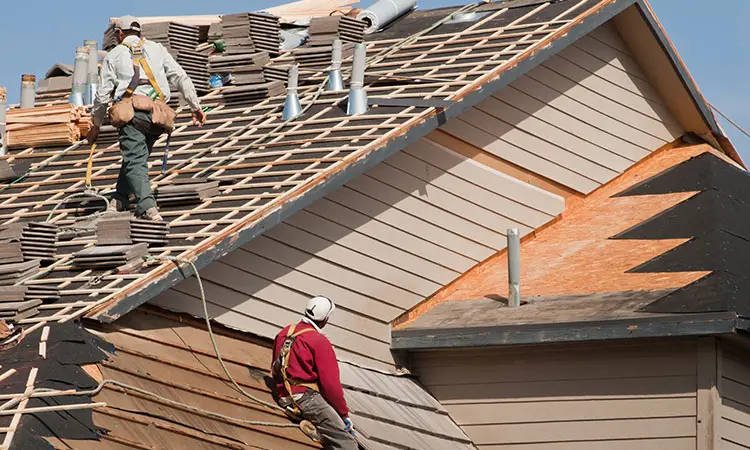
Repair addresses isolated, specific damage to an otherwise sound roof. Replacement makes sense when damage is widespread (more than 25–30% of the surface), when the roof is near the end of its design lifespan, or when repair costs approach 30% of replacement cost. A trustworthy contractor will tell you honestly which situation you’re in. If three separate contractors all recommend replacement, believe them.
Is it okay to put a new layer of shingles over old ones?
The International Building Code (IBC) permits a maximum of two layers of asphalt shingles on most structures. Adding a second layer saves the tear-off cost ($1,000–$3,500) but adds weight, traps heat, and hides deck problems. For repairs, it’s sometimes done on isolated sections. For full replacement, a complete tear-off is almost always the better long-term investment.
Key Takeaways & Next Steps
Roof problems don’t have to spiral into expensive disasters if you catch them early and respond correctly. Here’s what to remember from this guide:
- Most leaks start at flashing, not shingles — always inspect penetrations first
- Repair costs range from $150 for minor shingle work to $3,000+ for structural or complex leak issues in 2026
- A small set of repairs are genuinely DIY-friendly; anything structural, multi-story, or involving flashing calls for a licensed roofing contractor
- Emergency tarping + photo documentation protects both your home and your insurance claim
- Annual maintenance — clear gutters, check flashing, inspect attic ventilation — prevents the majority of common roof issues
Your next step: if you have an active problem, use the emergency steps above and contact a licensed local roofer for an inspection. If you’re being proactive, schedule a professional roof inspection this spring or fall — it typically costs $150–$350 and can catch $2,000 problems before they become $10,000 problems.
At Roofing SEO Masters , our mission is to help established, reputable roofing professionals grow their businesses by connecting with homeowners who need their expertise. We offer specialized digital marketing services like Local Business Citations to improve local search visibility, Facebook Ads to reach new customers, and comprehensive Google Business Profile optimization to ensure your information is accurate and prominent. For larger organizations, we offer an Enterprise Package designed to scale. Learn more about our agency , check out our case studies , and don’t hesitate to contact us to discuss how we can support your business goals.
Disclaimer: All pricing reflects 2026 estimates and varies by location, home complexity, and contractor. Always verify contractor licensing and insurance in your state. Consult local building codes before beginning any roofing work, even repairs..


Leave a Reply